- Arun P
- April 30, 2026
- Blogs
- 0 Comments
IT migrations are no longer simple lift-and-shift projects. Today’s enterprises operate across on-premises data centers, hybrid environments, multi-cloud platforms, legacy systems, and distributed networks. Yet many migration programs still begin with incomplete asset inventories, outdated CMDB records, and limited visibility into dependencies.
That creates a dangerous gap between migration plans and operational reality.
While organizations invest heavily in migration tools, cloud platforms, and execution teams, many overlook the most critical success factor: infrastructure intelligence.
Without accurate, proactive insights into assets, lifecycle status, vulnerabilities, utilization, and interdependencies, migration decisions become assumptions. And assumptions are expensive.
Infrastructure intelligence bridges this gap by turning raw infrastructure data into clear, actionable strategy. It enables organizations to migrate with confidence, reduce risk, control costs, and modernize smarter.
Market Triggers Driving Smarter IT Migrations
Several market forces are accelerating migration initiatives while increasing the need for better visibility and planning.
1. Cloud Cost Pressure
Many organizations moved quickly to cloud platforms, only to discover escalating operational costs. As a result, enterprises now demand optimization before migration-not after.
2. Legacy Infrastructure Risk
Aging hardware, unsupported software, and end-of-life systems expose businesses to downtime, compliance gaps, and security threats.
3. Security & Compliance Demands
Modern migrations must account for vulnerabilities, patch status, regulatory requirements, and cyber resilience.
4. Hybrid IT Complexity
Organizations are managing workloads across multiple environments. Without infrastructure intelligence, migration planning becomes fragmented.
5. Board-Level ROI Expectations
Leadership teams expect migrations to deliver measurable outcomes: lower cost, better performance, reduced risk, and operational agility.
Common Pain Points in IT Migrations
Despite strong intentions, many migration programs struggle with the same recurring issues.
Incomplete Asset Visibility
Teams do not have a trusted inventory of servers, storage, network devices, applications, and dependencies.
Unknown Dependencies
Critical systems are connected in ways that are undocumented, increasing outage risk during migration.
Migrating Unnecessary Workloads
Organizations often make redundant, underutilized, or obsolete assets simply because they lack the data to challenge scope.
Lifecycle Blind Spots
End-of-sale, end-of-support, and end-of-life assets are discovered too late.
Security Risks
Unpatched vulnerabilities and misconfigurations are carried into new environments.
Poor Decision-Making Speed
Teams spend weeks collecting spreadsheets instead of executing strategies.
Our Solution: Infrastructure Intelligence Powered by ZENatlas + Virtual Tech Gurus
To address these challenges, organizations need more than migration manpower-they need a decision engine.
That is where ZENatlas + Virtual Tech Gurus creates measurable value.
ZENatlas Delivers Infrastructure Intelligence
ZENatlas provides a centralized, AI-driven view of your infrastructure, including:
- Asset discovery across servers, storage, network, and backup systems
- Lifecycle intelligence (EOS, EOL, support status)
- Vulnerability mapping tied to assets and CVEs
- Utilization and optimization insights
- Risk prioritization dashboards
- Modernization recommendations
How These Challenges Are Solved
From Incomplete Visibility to Full Discovery
Instead of relying on outdated spreadsheets, ZENatlas builds a trusted infrastructure inventory.
From Guesswork to Data-Driven Scope
Assets are categorized into:
- Migrate
- Retain
- Replace
- Retire
- Extend through TPM
From Hidden Risk to Proactive Mitigation
Security vulnerabilities, unsupported assets, and dependency risks are identified before execution begins.
From Delays to Faster Decisions
Leadership teams gain dashboards and actionable recommendations.
From Disruption to Controlled Execution
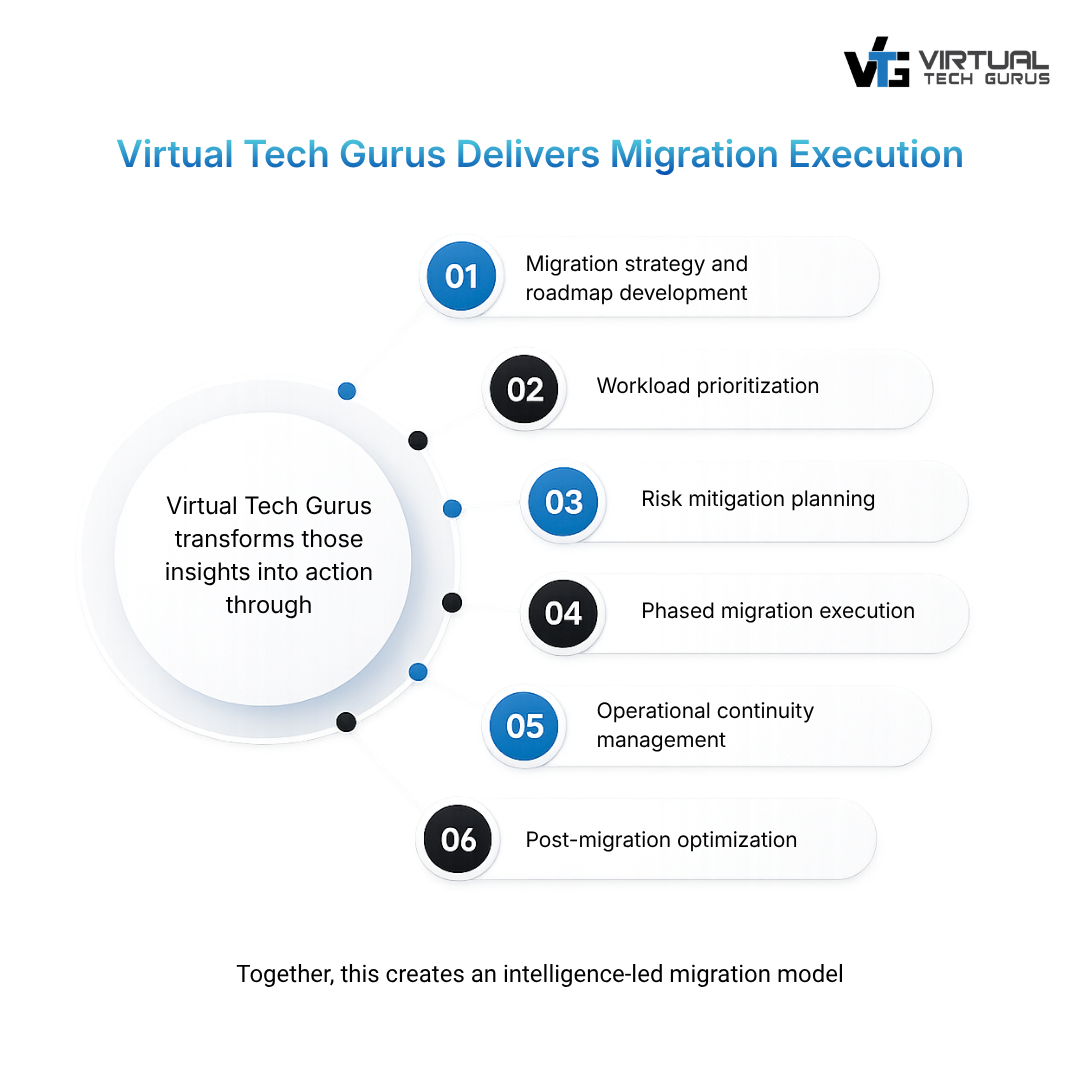
Virtual Tech Gurus uses phased migration models aligned to business priorities and operational windows.
Business Benefits of Solving These Pain Points
When organizations adopt infrastructure intelligence before migration, the benefits are significant.
Lower Migration Costs
Avoid moving unnecessary assets and optimize infrastructure spend.
Reduced Downtime Risk
Dependency visibility enables safer cutovers and transition planning.
Stronger Security Posture
Known vulnerabilities can be remediated before migration.
Faster Time to Value
Teams spend less time collecting data and more time executing outcomes.
Better ROI from Existing Assets
TPM and lifecycle insights extend usable asset life where appropriate.
Executive Confidence
Leaders gain measurable control over risk, cost, and progress.
Measurable Outcomes Organizations Can Expect
Enterprises using an intelligence-led migration strategy commonly achieve:
- 30–40% reduction in migration scope through rationalization
- Faster planning cycles with centralized visibility
- Lower infrastructure spends by avoiding premature upgrades
- Reduced outage risk through dependency mapping
- Improved security readiness with vulnerability prioritization
- Higher ROI from assets through TPM and lifecycle optimization
Conclusion
Successful IT migrations are not driven by tools alone. They are driven by the quality of decisions made before execution begins.
That is why infrastructure intelligence is the missing link.
With ZENatlas + Virtual Tech Gurus, organizations gain visibility, lifecycle intelligence, and execution expertise needed to migrate smarter, reduce risk, and maximize value.